The United States maintains long-standing economic sanctions on Cuba, which restrict trade, financing, and access to energy markets. These measures have contributed to:
- Reduced fuel imports
- Higher transportation costs
- Lower food production and availability
While humanitarian goods are technically exempt, logistical and financial barriers still affect delivery and scale.
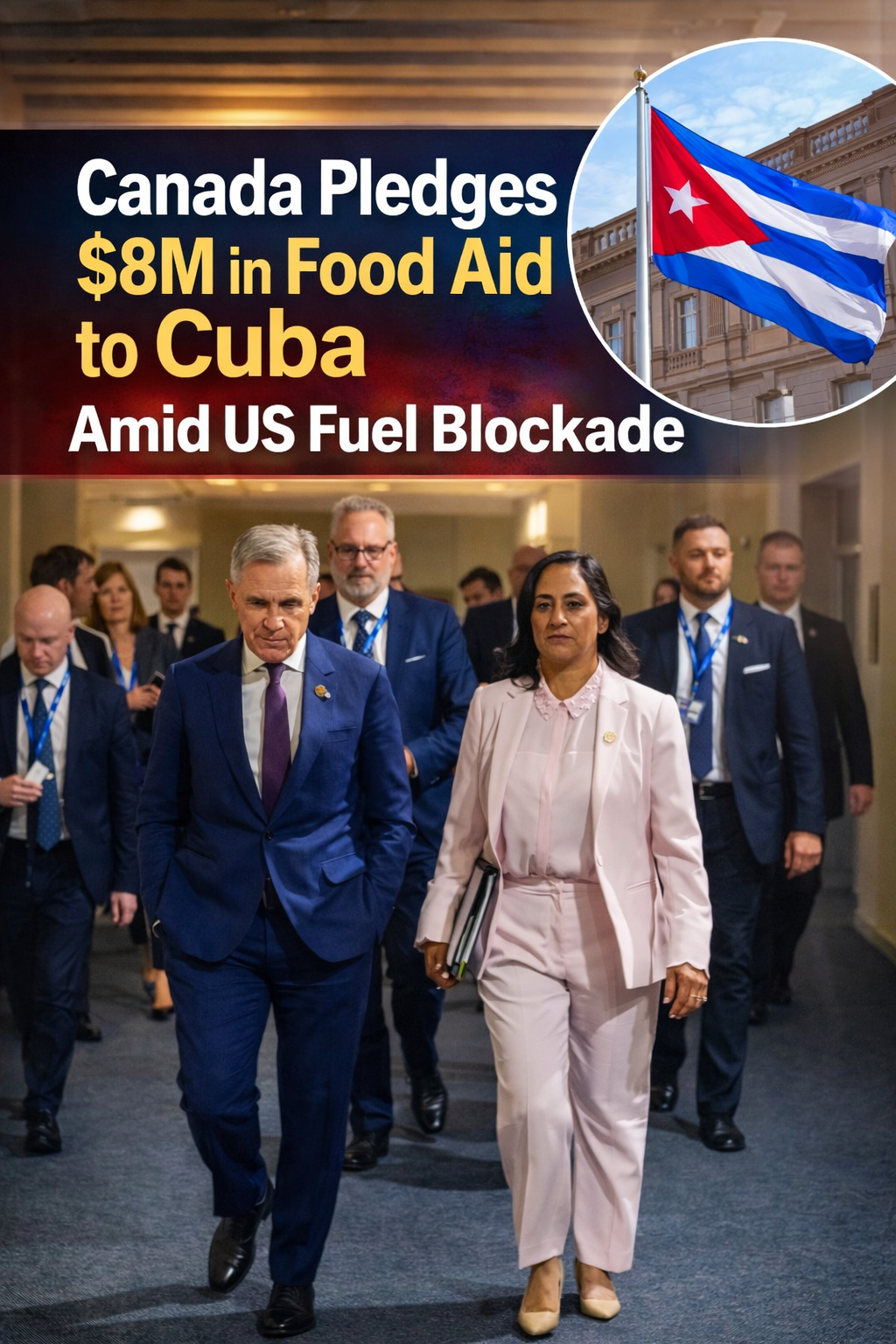
Step 3: Canada’s $8 Million Aid Announcement
Canada’s government announced $8 million in food assistance aimed at addressing urgent humanitarian needs, particularly for vulnerable populations such as:
- Children
- Elderly citizens
- Pregnant women
The announcement was made by Anita Anand, Canada’s Minister of Foreign Affairs.
Step 4: Why the Aid Goes Through the United Nations
Instead of working directly with the Cuban state, Canada chose to deliver the aid through UN humanitarian agencies. This approach:
- Ensures neutrality
- Improves transparency and oversight
- Targets civilians directly
- Aligns with international humanitarian standards
Common UN partners in such efforts include the World Food Programme (WFP) and UNICEF.
Step 5: How the Aid Will Be Used
The funding is expected to support:
- Emergency food distribution
- Nutrition programs
- Support for at-risk communities
The focus is on short-term relief, not long-term economic reform.
Step 6: International Reactions and Broader Context
Canada’s move reflects a broader international debate:
- Some countries emphasize humanitarian relief regardless of politics
- Others argue that aid should be tied to systemic reforms
Canada has historically taken a more independent approach to Cuba compared to the United States, maintaining diplomatic relations and supporting humanitarian engagement.
Step 7: Why This Matters Globally
This decision highlights key global issues:
- The humanitarian impact of sanctions
- The role of neutral international organizations
- How middle powers like Canada respond to crises
It also raises questions about how aid can best reach people without becoming politicized.
Final Thoughts
Canada’s $8 million pledge is a humanitarian response to immediate needs in Cuba, delivered through international channels to ensure civilian impact. While it does not resolve the underlying economic and political challenges, it provides short-term relief during a difficult period.
As global tensions and humanitarian crises continue to intersect, this case shows how countries balance foreign policy, ethics, and urgent human needs.