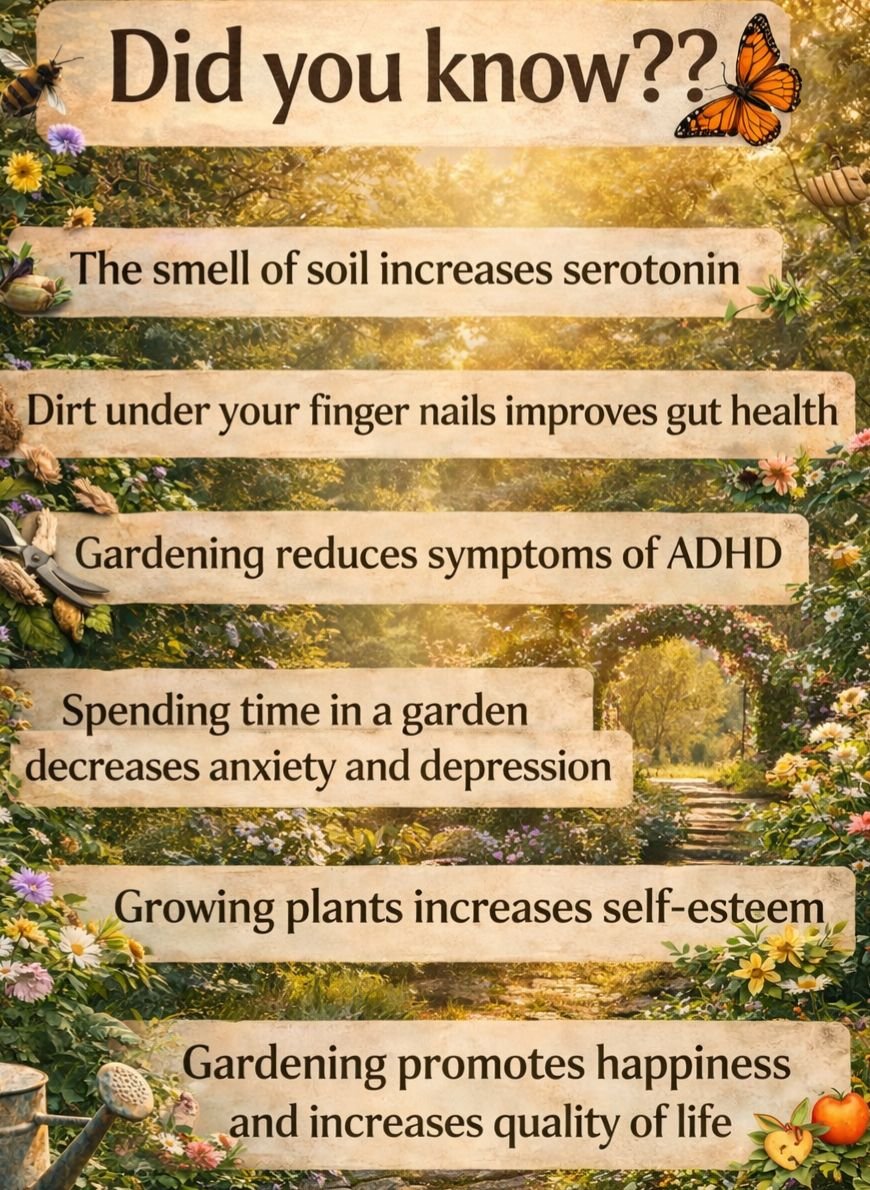
Here is a detailed, step-by-step continuation of your article, keeping the same warm and informative tone:
Step 1: Start Small and Keep It Simple
If you’re new to gardening, you don’t need a large backyard or expensive tools. A few pots on a balcony, a small raised bed, or even herbs on a windowsill can make a difference.
Starting small prevents overwhelm and allows you to truly enjoy the process. Choose easy-to-grow plants like basil, mint, lettuce, or marigolds. Watching something grow from seed to harvest builds confidence and encourages consistency.
Remember: gardening isn’t about perfection — it’s about connection.
Step 2: Create a Daily Gardening Ritual
Gardening becomes most powerful when it becomes a routine. Even 10–15 minutes a day can shift your mindset. Watering plants in the morning, pruning leaves in the evening, or simply observing new growth gives your mind a gentle reset.
These quiet moments outdoors slow racing thoughts and ground you in the present. The rhythm of nature — sunlight, soil, water, growth — naturally encourages mindfulness without you even trying.
Step 3: Engage All Your Senses
One of the most healing aspects of gardening is sensory engagement:
- The smell of fresh soil
- The sound of leaves moving in the breeze
- The feel of cool earth in your hands
- The vibrant colors of flowers and vegetables
- The taste of freshly picked produce
When you engage your senses, you anchor yourself in the present moment. This sensory grounding reduces anxiety and helps regulate stress levels.