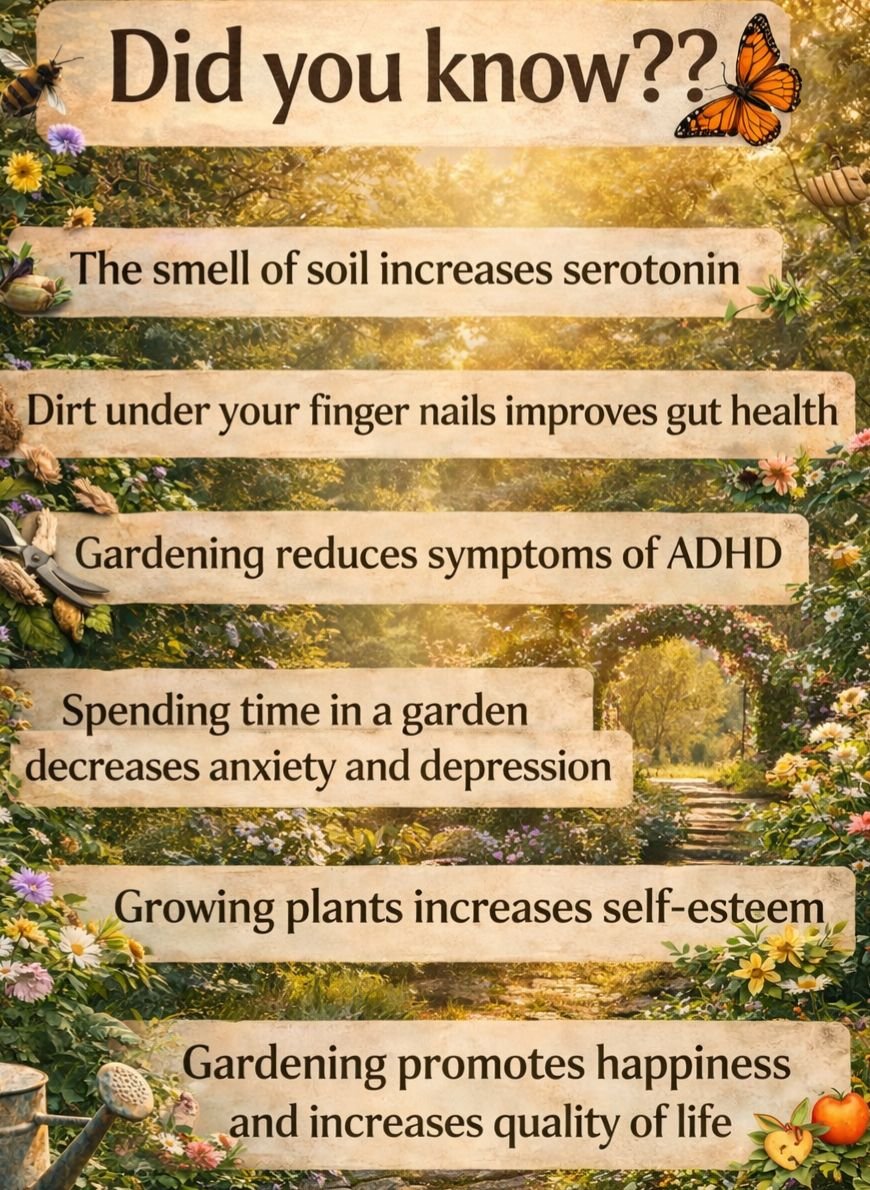
Growing your own vegetables and fruits encourages healthier eating habits. When you harvest something you planted yourself, you’re more likely to cook and eat it.
Fresh produce contains more nutrients than store-bought options that have traveled long distances. Gardening also involves physical movement — bending, lifting, digging, stretching — which improves flexibility, strength, and cardiovascular health.
It’s gentle exercise with a meaningful reward.
Step 5: Use Gardening as Emotional Therapy
Plants don’t rush. They don’t compete. They grow at their own pace.
When life feels chaotic, tending to something steady and predictable can be deeply calming. Gardening teaches patience, resilience, and acceptance. Not every seed will sprout. Not every plant will thrive. But each attempt teaches something valuable.
This mirrors life — growth often requires trial, error, and care.
Step 6: Build Community Through Gardening
Gardening can also be social. Community gardens, seed swaps, or simply sharing extra tomatoes with a neighbor create connection.
Conversations flow easily when centered around something positive and creative. Sharing gardening tips or exchanging plants builds relationships rooted in cooperation rather than competition.
Connection, like plants, needs nurturing.
Step 7: Teach Children the Value of Growth
Introducing children to gardening can improve focus, responsibility, and emotional regulation. Watching a seed turn into a plant helps them understand patience and effort.
It also reduces screen time and increases outdoor activity, strengthening both physical health and creativity.
When children dig in the soil, they aren’t just playing — they’re learning how life grows.
Step 8: Embrace Seasonal Living
Gardening reconnects us with natural cycles. Spring planting, summer growth, autumn harvest, winter rest — each season has its purpose.
Living seasonally helps us accept that rest is just as important as productivity. Just as soil needs recovery time, so do we.
Nature reminds us that pauses are not failures; they are preparation for the next bloom.
Step 9: Practice Gratitude Through Growth
Every new sprout is a small miracle. When you begin to notice these small victories, gratitude grows naturally.
Gardening teaches appreciation for sunlight, rain, and time. It shifts your focus from what’s missing to what’s growing — both in the garden and within yourself.
Gratitude strengthens emotional resilience and promotes long-term happiness.
Step 10: Let Gardening Become a Lifelong Companion
Gardening isn’t just about plants. It’s about healing, balance, and renewal. Whether you garden for beauty, food, relaxation, or connection, the impact reaches far beyond the soil.
The simple act of nurturing life reminds us that growth is always possible — even after difficult seasons.
Final Reflection
Gardening is a quiet revolution against stress, disconnection, and fast-paced living. It invites us to slow down, breathe deeply, and participate in something ancient and meaningful.
When you place your hands in the soil, you aren’t just planting seeds —
you’re planting calm, strength, patience, and joy.
And with time, both you and your garden will bloom. 🌿🌸