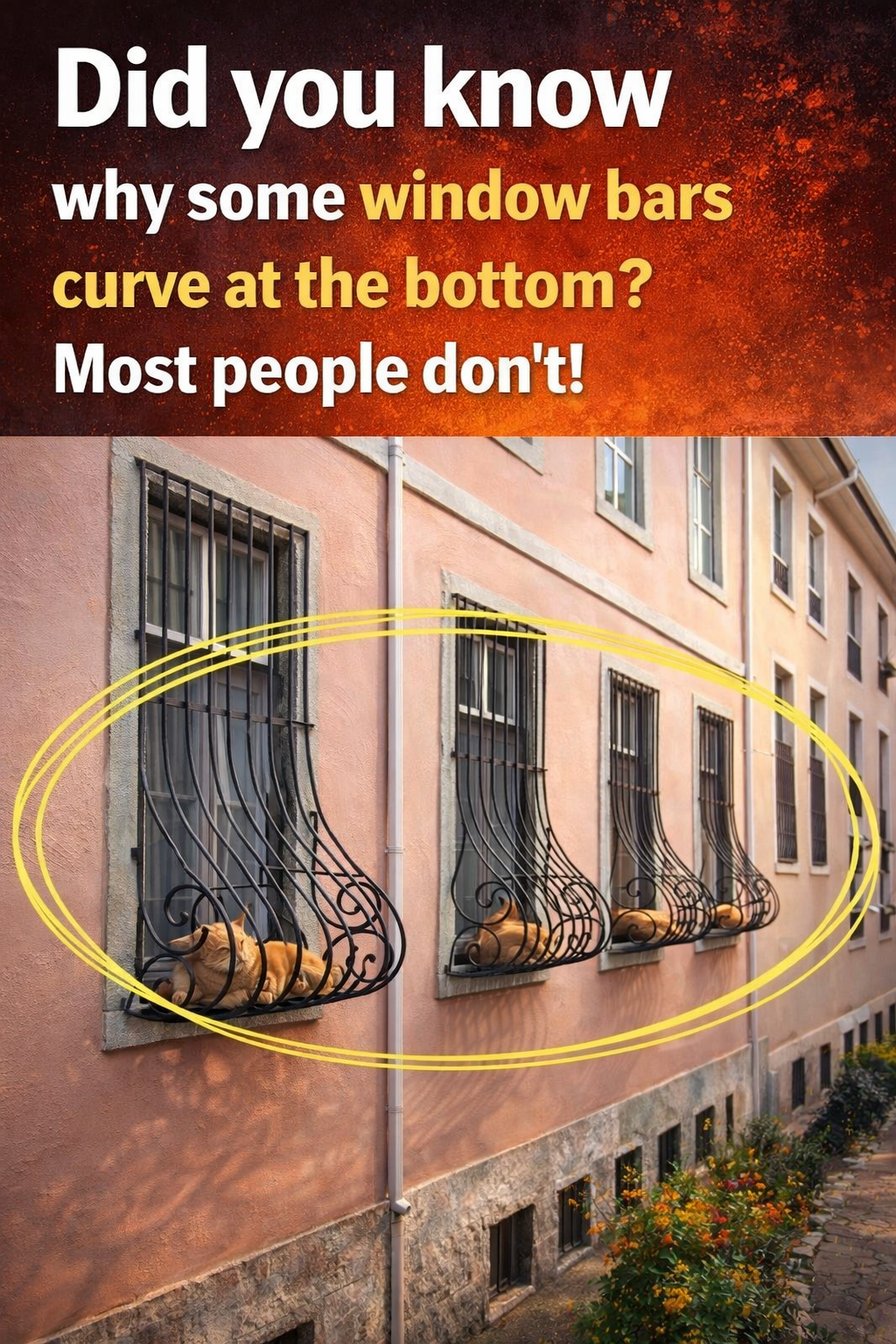
Interestingly, the curve can also enhance security.
Because the bars extend outward and then curve back in, they make it harder for someone to tamper with the window directly. The shape limits leverage points that could be used to pry open the bars.
In other words, the curve isn’t just decorative — it’s strategic.
Step 4: It Protects Glass from Impact
The curved design acts as a small buffer zone between the outside world and the window glass.
If something hits the bars — like a thrown object or falling debris — the outward bulge absorbs distance before the object reaches the glass. That extra few inches can help prevent cracks or breakage.
Step 5: It Reflects Architectural Style
In many regions, especially Spain, Portugal, and parts of Latin America, curved wrought-iron window bars are part of traditional architectural design.
They add depth and dimension to flat exterior walls. Rather than looking like strict security fixtures, they become ornamental features that enhance curb appeal.
Sometimes what looks purely functional is actually rooted in design tradition.
Step 6: It Allows Emergency Access (In Some Designs)
Some curved window guards are built with hinges or quick-release mechanisms. The extra space makes it easier for emergency responders to access windows if needed.
However, this depends on local building codes and installation style. Not all curved bars are designed for emergency exit — but in some cases, the added space improves accessibility.
Step 7: It Blends Safety with Livability
The biggest reason most people don’t realize?
Curved window bars represent a balance between security and comfort. Instead of turning a home into a fortress, they soften the appearance. They allow plants, airflow, light, and style to coexist with protection.
It’s thoughtful engineering hidden in plain sight.
Final Thought
What seems like a small architectural detail often carries multiple layers of purpose. Curved window bars aren’t just decorative metalwork — they’re a smart blend of safety, ventilation, plant support, and tradition.